Friday, May 30, 2008

"Ich bin cool" project


Since Uwe Kind's seminal a couple of months ago I have been meaning to put at least one of his songs into action and today was the day!!! The kids LOVED it and they already "sing" and "dance" their first German words!!! It was so much fun!!!

Abifeier 2008 DST


A wonderful evening at the DST yesterday - the graduation of my favourite girls!

It was a wonderful ceremony, the kids set up a beautiful performance, singing dancing and acting!

Girls I am sooooo proud of you!

Monday, May 26, 2008

Memory


from wikipedia

In psychology, memory is an organism's ability to store, retain, and subsequently retrieve information. Traditional studies of memory began in the realms of philosophy, including techniques of artificially enhancing the memory. The late nineteenth and early twentieth century put memory within the paradigms of cognitive psychology. In recent decades, it has become one of the principal pillars of a branch of science called cognitive neuroscience, an interdisciplinary link between cognitive psychology and neuroscience.
Processes
There are several ways to classify memories, based on duration, nature and retrieval of information. From an information processing perspective there are three main stages in the formation and retrieval of memory:
Encoding or registration (processing and combining of received information)
Storage (creation of a permanent record of the encoded information)
Retrieval or recall (calling back the stored information in response to some cue for use in a process or activity)


Classification
A basic and generally accepted classification of memory is based on the duration of memory retention, and identifies three distinct types of memory: sensory memory, short term memory and long term memory.

Sensory
Sensory memory corresponds approximately to the initial 200 - 500 milliseconds after an item is perceived. The ability to look at an item, and remember what it looked like with just a second of observation, or memorization, is an example of sensory memory. With very short presentations, participants often report that they seem to "see" more than they can actually report. The first experiments exploring this form of sensory memory were conducted by George Sperling using the "partial report paradigm." Subjects were presented with a grid of 12 letters, arranged into three rows of 4. After a brief presentation, subjects were then played either a high, medium or low tone, cuing them which of the rows to report. Based on these partial report experiments, Sperling was able to show that the capacity of sensory memory was approximately 12 items, but that it degraded very quickly (within a few hundred milliseconds). Because this form of memory degrades so quickly, participants would see the display, but be unable to report all of the items (12 in the "whole report" procedure) before they decayed. This type of memory cannot be prolonged via rehearsal.

Short-term
Some of the information in sensory memory is then transferred to short-term memory. Short-term memory allows one to recall something from several seconds to as long as a minute without rehearsal. Its capacity is also very limited: George A. Miller, when working at Bell Laboratories, conducted experiments showing that the store of short term memory was 7±2 items (the title of his famous paper, "The magical number 7±2"). Modern estimates of the capacity of short-term memory are lower, typically on the order of 4-5 items, and we know that memory capacity can be increased through a process called chunking. For example, if presented with the string:
FBIPHDTWAIBM
people are able to remember only a few items. However, if the same information is presented in the following way:
FBI PHD TWA IBM
people can remember a great deal more letters. This is because they are able to chunk the information into meaningful groups of letters. Beyond finding meaning in the abbreviations above, Herbert Simon showed that the ideal size for chunking letters and numbers, meaningful or not, was three. This may be reflected in some countries in the tendency to remember phone numbers as several chunks of three numbers with the final four-number groups generally broken down into two groups of two.
Short-term memory is believed to rely mostly on an acoustic code for storing information, and to a lesser extent a visual code. Conrad (1964)[1] found that test subjects had more difficulty recalling collections of words that were acoustically similar (e.g. dog, hog, fog, bog, log)

Long-term
The storage in sensory memory and short-term memory generally have a strictly limited capacity and duration, which means that information is available for a certain period of time, but is not retained indefinitely. By contrast, long-term memory can store much larger quantities of information for potentially unlimited duration (sometimes a whole life span). For example, given a random seven-digit number, we may remember it for only a few seconds before forgetting, suggesting it was stored in our short-term memory. On the other hand, we can remember telephone numbers for many years through repetition; this information is said to be stored in long-term memory. While short-term memory encodes information acoustically, long-term memory encodes it semantically: Baddeley (1966)[2] discovered that after 20 minutes, test subjects had the least difficulty recalling a collection of words that had similar meanings (e.g. big, large, great, huge).
Short-term memory is supported by transient patterns of neuronal communication, dependent on regions of the frontal lobe (especially dorsolateral prefrontal cortex) and the parietal lobe. Long-term memories, on the other hand, are maintained by more stable and permanent changes in neural connections widely spread throughout the brain. The hippocampus is essential to the consolidation of information from short-term to long-term memory, although it does not seem to store information itself. Rather, it may be involved in changing neural connections for a period of three months or more after the initial learning.
One of the primary functions of sleep is improving consolidation of information, as it can be shown that memory depends on getting sufficient sleep between training and test, and that the hippocampus replays activity from the current day while sleeping


Saturday, May 24, 2008

Last lesson with Aggeliki


Originally uploaded by tpapapanayiotou
Aggeliki takes her oral exam in ECCE tomorrow and that's it for our lessons! Good lucj my dear! I am sure you'll do fine!

Tuesday, May 20, 2008

Special Language Points (answers)


1. d
2. a
3. d
4. b
5. c
6. d
7. c
8. c
9. a
10. a
11. d
12. d
13. d
14. a
15. d
16. d
17. c
18. d
19. a
20. a

Sunday, May 18, 2008

Special Language Points


(During book presentation by Mr. Grivas, April, 2008)


1. My brother is becoming more ____ idiot every day.
a. as an c. than
b. than an d. of an

2. You’re ____ much of a coward to stop him.
a. too c. very
b. so d enough

3. The two political parties are ____ a muchness. It’s hard to choose between them.
a. too much c. as much
b. much as d. much of

4. It’s ____ much the joke that’s funny; it’s how you tell it.
a. very c. too
b. not so d. so not

5. She was ____ for her experience.
a. not the worse c. none the worse
b. not the worst d. none the worst

6. This beach is nowhere ____ clean as the other one.
a. far from c. as near
b. next to d. near as

7. You bought much ____ much oil.
a. so c. too
b. as d. of

8. They received no help ___.
a. however c. whatsoever
b. whichever d. wherever

9. She’d just as ___ study nearby as move away from home.
a. soon c. sooner
b. soon as d. sooner as


10. Their attitude makes it ____ more difficult to come to an agreement.
a. all the c. the all
b. all the all d. all

11. We were in danger - ____ much so that I feared for our lives.
a. as c. such as
b. such d. so

12. It ____ that the train has been delayed.
a. must well be c. can be
b. can well be d. may well be

13. Waterskiing is difficult; surfing ____.
a. so more c. all more so
b. so more so d. more so

14. We can get more money if ____.
a. need be c. need is
b. be need d. is need

15. ____, she takes the eight o’clock bus.
a. As often than c. More often as
b. So often as d. As often as not

16. ____ often than not, he comes home late.
a. Rather c. All too
b. As d. More

17. If that’s what you really want, so ____.
a. it be c. be it
b. be d. to be

18. We’re going to London tomorrow, ____ what may.
a. to come c. be come
b. come to d. come

19. The answer’s wrong but, ____ it may, at least you tried.
a. be that as c. as that as
b. that be d. come what

20. I’ll help you with your project. I’m sure you would do ___ for me.
a. as much c. such
b. so much d. as so

(I'll be posting the answers shortly)

Thursday, May 15, 2008

Another school year is coming to an end...

(photo taken at Goethe Institut in 2005)

Yes, it is true. Language exams have already started last weekend and slowly we come towards our final lessons. This year I do not have much stress, since I do not work at a language school and the pressure is less, but unfortunately some personal problems have not let me relax as I wanted to, this year.

Beginning September, my students and I had many ideas, most of which we published on this blog.

Looking back at my posts I see that we managed to cover many areas of interest and most of the kids took part with enthusiasm!

The projects included:


  • Cooking recipies and videos, including a project involving Jamie Oliver's ideas about school dinners

  • "What is your personality" videos

  • Hobbies (Freizeit) descriptions

  • Newspaper project

  • Googling project

  • Making videos and writing texts about the environment, including Greenpeace projects

  • A tribute to German movies

  • The "love & hate" video based on Blumetopf's song "Liebe und Hass"

  • Writing about school

  • The most loved "Superheroes project"

  • Our Christmas project, including recipies, traditions, compositions about the kids' favourite Xmas holiday and videos with wishes and songs plus a movie party just before Christmas Eve

  • And last but not least, the traditional "book-movie" project in the end of the year

I also include some notes on the seminars I have attended this year and I would like to thank all the instructors and professors who gave me their permission to do so.


This blog will go on with some more notes of a seminar I will be attending as well as with pics from my favourite girls' "graduation" and will continue with some more personal posts and pictures, like every year during the summer.


I would like to thank all my students who have put up with me this year, for participating in every crazy thing that came into my mind! I wish you the best with your exams guys! And of course I wouldn't forget the parents who trust me with their kids!


Have a great summer!!


Monday, May 12, 2008

Elektra


One of the most beautiful surprises today - my student Elektra (who is no longer my student but I just love calling her that!!) came to see me!
She is studying in Germany - just came back to Greece to see her folks, but did not leave before visiting with me!
I've been teaching for 15 years and I've been through a lot, but kids like Elektra give me the reason to continue!!
Thank you my dear for coming by!

Saturday, May 10, 2008

Good luck Aggeliki and Peter!


Mein Lieblingsfilm (von Peter)


Mein Lieblingsfilm ist “Der Herr der Ringe, Die zwei Turme” Das ist ein spannender und abenteuerlicher Film. Der Protagonist, Frodo, fährt zu Mordor, weil er den Ring zerstören möchte. Seine Freunde führen Krieg mit Sauron, den Herr der Ringe.
Ich empfehle Ihnen diesen Film, weil er so spannend ist.

Wednesday, May 7, 2008

The ring (by Angeliki)


My favourite film is “The ring”. It is a horror-drama film. There are three sections of this film: The Ring Virsus which is the original Chinese horror film, The Ring 1 and The Ring 2. There is going to be a “Ring 3” in 2009 but this is not certain yet.

Plot and Actors

The director of the Ring 1 is Hideonakata, who is Chinese.
The main story begins with Rachel (Naomi Watts) and her son (David Dorfman).
There is a tape which shows a horror film, but it is actually a curse. Samara is a girl whose ghost is wandering because her mother killed her and threw her into a well.


Strongly recommended because of its adventurous and exciting plot.
Excellent actors with various backgrounds and LOTS of HORROR!!

Tuesday, May 6, 2008

My favourite film, by Giannis


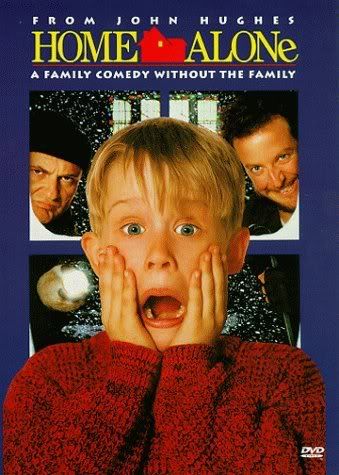
Home alone is a comedy which stars Macaulay Culkin. It takes place in Chicago, America and tells the story of Kevin and his family.
At the beginning of the film, the family is preparing for a trip. The next day they go to the airport and take the airplane to Paris. They go to Paris for Christmas holiday. But they forget Kevin home and he is home alone! In America, Kevin has to protect the house and himself from two bad thieves. “Home alone” is entertainment for the whole family. I think it’s the most exciting film!


My favourite film (by Konstantina)


The Simpsons is my favourite film. This film is about a family who does funny things.
It is very funny! You must see it!

My favourite book (by Konstantina)


Non je me parle (αγαπημένο μου ημερολόγιο) by Sandrine Pernusch

This book is about a girl who has a diary and there she writes her thoughts and feelings. Her name is Chloe.
It is a very good, interesting and moving book.

Sunday, May 4, 2008

Lieblingsfilm von Vasso


Der Titel des Films ist “Herr der Ringe” und verlässt sich auf JR.R. Tolkiens Buch. Es handelt sich von einer Gesellschaft, die einen Ring zerstören muss. Meiner Meinung nach, ist der letzte Film der Trilogie das Beste. Die Mehrheit der Schauspieler ist sehr bekannt und beliebt und das Drehbuch finde ich gut geplant.
Manchmal sind die Effekts, zum Beispiel die Gebirge, nicht so realistisch, aber die Landschaften sind zauberhaft.
Am meisten gefällt mir die Musik, die unzertrennlich mit den Abenteuerszenen ist.
Auch der Aufbau hat mir beeindruckt, denn Frodo, die Hauptperson, und seine Freunde schaffen am Ende das Böse zu gewinnen.
Ich kann den Film wirklich sehr empfehlen und ich glaube er würde nicht nur Jugendlichen, sondern auch Volljährigen interessieren.


Friday, May 2, 2008

Favourite TV series (Maria)


http://www.esnips.com/doc/2d841988-474a-4a1a-9a22-0e44fdcc3bdf/House_MD_Intro

The notebook (by Marianthi)


The movie takes place in a small village 60 years ago.
Ali was a pretty girl from a rich family and one day she went to Seebrook on holiday. One day, Ali meets Noah, a handsome but poor young man who lives in the village. Noah falls in love with Ali, but she doesn’t like him, they fight all the time.
Gradually, Ali falls in love with him and they spend a lot of time together.
Ali’s mother doesn’t want her daughter to be with Noah, so she takes her far away.
Noah sends her letters but she never receives them because of her mother.
Later Ali meets a rich man and accepts to marry him.
Her plans change though when she sees a picture of Noah in the newspaper, leaves her fiancé and goes back to Noah.
This story is written in a notebook they read it when they are old, although Ali does not remember a thing…
A very romantic story…

Thursday, May 1, 2008

Book -movie project (Juna)


We have made these videos in the beginning of the school year during our practice for the ECPE oral. I couldn't post them then, because of my really slow connection. Now that the book project is back on I decided to try and upload them...

Book -movie Project (Artemis)

We have made these videos in the beginning of the school year during our practice for the ECPE oral. I couldn't post them then, because of my really slow connection. Now that the book project is back on I decided to try and upload the videos...

Featured Post

Teaching online through Lockdown

Some months ago, when I wrote a blog on online Teaching for iTDi , I could never imagine that the teaching world would turn digital overn...